Sacred Valley Full Day Tour: Complete Itinerary
A Sacred Valley tour full day covers four landmark stops: the ruins and market at Pisac, the fortress of Ollantaytambo, the weaving town of Chinchero and the circular terraces of Moray. You leave Cusco in the morning, loop through the valley over roughly 10 to 12 hours, and return by early evening with the option to carry straight on toward Machu Picchu. This guide walks through the real timing, what each stop delivers, what your ticket and operator include, and how the valley fits into a wider Peru trip.
What Does a Sacred Valley Tour Full Day Actually Cover?
A full-day tour covers four main archaeological sites and at least one artisan market, strung along a single driving loop northwest of Cusco. The Cusco region draws roughly 1.8 million visitors a year, most of them headed toward Machu Picchu (World Monuments Fund, 2024). The Sacred Valley is the stretch they pass through on the way, and a day tour turns that transit corridor into the main event.
The standard route is Pisac, then Ollantaytambo, then Chinchero and Moray, though operators reorder these to manage crowds and lunch timing. Expect a pickup between 7 and 8 a.m., a sit-down lunch around midday, and a return to Cusco in the early evening. If you want to carry on to Machu Picchu, many travelers end the day in Ollantaytambo rather than returning to Cusco.
Pisac: Ruins Above a Famous Market
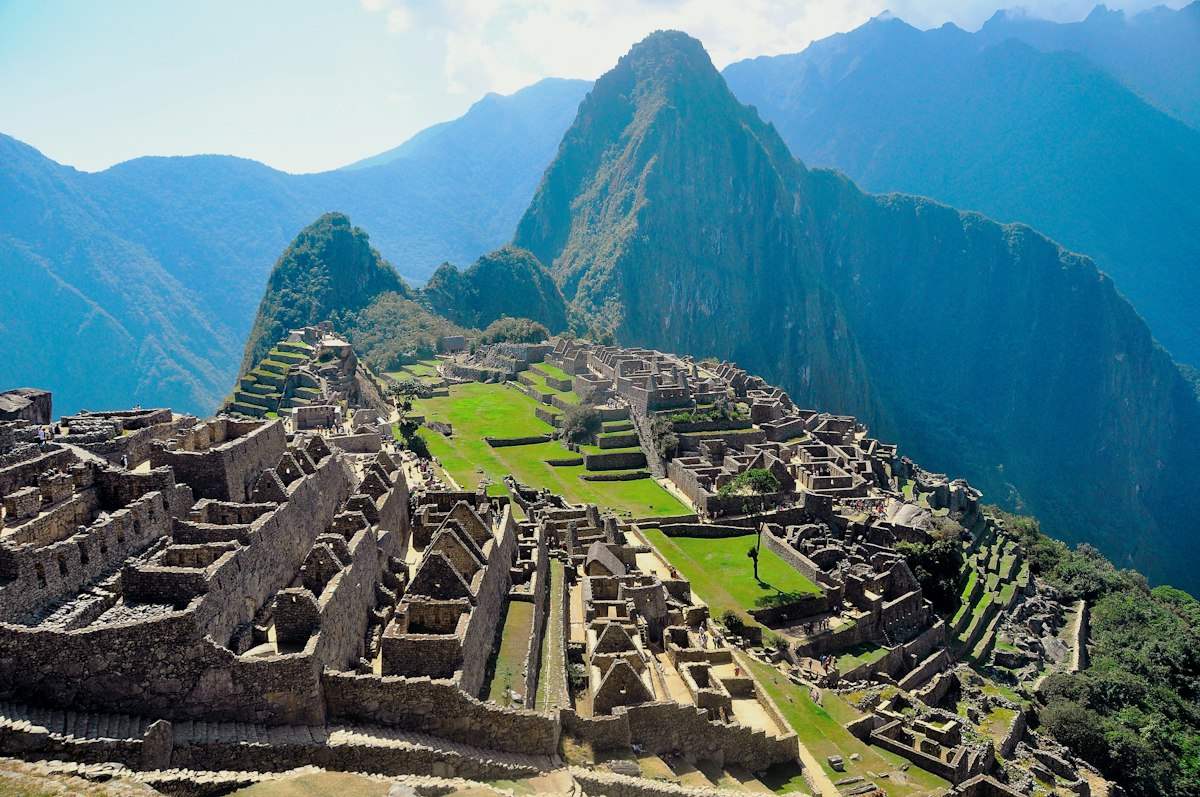
Pisac pairs a hilltop Inca citadel with one of the most visited craft markets in the region, which is why most tours start here. The ruins sit on a ridge above the modern town, with agricultural terraces fanning down the slope and ceremonial stonework at the top. Guides usually give you time to walk a section of the terraces before heading down to the market stalls.
The market is where the valley's commercial side shows itself: alpaca textiles, silver jewelry, ceramics and produce. Haggling is expected and polite. Buy here if you see something you like, because prices tend to climb closer to Cusco. A typical stop runs 90 minutes to two hours, split between the archaeological site and the stalls.
Ollantaytambo: The Fortress and Your Gateway to Machu Picchu
Ollantaytambo is both a working Inca town and the departure point for most trains to Machu Picchu, which makes it the hinge of the whole itinerary. The site rises in steep terraces toward the Temple of the Sun, where six massive pink granite blocks still stand after centuries. The stone was quarried across the valley and hauled up the slope, a feat that still puzzles engineers.
The town below keeps its original Inca street grid, so you can walk lanes laid out five centuries ago. Because Ollantaytambo sits lower than Cusco, it offers a gentler altitude experience, which matters if you are still adjusting. For planning that adjustment, our guide on how to acclimatize to altitude before Machu Picchu covers the practical steps.
Chinchero and Moray: Weaving and the Inca Farm Lab
Chinchero and Moray close the loop with the valley's most distinct experiences: living textile tradition and Inca agricultural engineering. Chinchero is a small Andean market town that still sustains its indigenous Quechua culture around ancient Inca structures. Weaving cooperatives here demonstrate the full process, from washing raw alpaca wool to dyeing it with plants and insects.
Moray is the day's quiet showpiece. Its concentric circular terraces plunge deep into the ground, dropping well over a hundred meters from the top ring to the floor, and the air at the lowest level can feel noticeably warmer than the rim. Researchers believe the Inca used these rings as a crop-testing ground, with each level acting like a different climate zone. Standing at the edge, you can feel the air change as you look down.
Many tours add the Maras salt pans near Moray, thousands of terraced evaporation pools fed by a salty spring. Maras sits outside the standard tourist ticket and charges its own small entrance, so check whether your tour includes it.
What Is Included and What Should You Bring?
A guided Sacred Valley tour usually includes round-trip transport from Cusco, a bilingual guide, and often a buffet lunch in Urubamba. Entrance to Pisac, Ollantaytambo, Chinchero and Moray runs through the Cusco tourist ticket, the Boleto Turistico, which operators commonly bundle into the price. Always confirm whether the ticket, lunch and the Maras salt pans are included, since these are the three items that vary most between operators.
A Perutrippers Sacred Valley day tour handles the ticket, transport and guiding as one package, so you are not sorting out logistics at each gate. If you are weighing how a valley day fits a broader Machu Picchu plan, our breakdown of Machu Picchu tour packages and how to choose the right one lays out the trade-offs.
Pack light but smart. Bring the following:
- Sun protection: a hat, sunglasses and high-SPF sunscreen, since the high-altitude sun is strong even on cool days.
- Layers: mornings are cold, midday is warm, and the sites offer little shade.
- Water and small snacks, plus small bills in soles for market purchases and bathroom fees.
- Comfortable shoes with grip for uneven stone steps and terraces.
- Your passport, which some guides check at ticketed sites.
How the Sacred Valley Connects to Your Machu Picchu Trip
The Sacred Valley is the natural warm-up for Machu Picchu, both geographically and physically. Ollantaytambo is where most trains to Aguas Calientes depart, so ending your tour there puts you on the doorstep of the onward journey rather than backtracking to Cusco. The valley also sits lower than the city in places, which gives your body a gentler altitude profile before the main event.
Cusco and Machu Picchu have both held UNESCO World Heritage status since the 1980s, and the valley threads the two together with sites that build context for what you will see at the citadel. Walking the terraces at Pisac and Moray first makes the scale of Machu Picchu easier to read. A day in the valley is the single most useful thing you can do before the trek or train.
If Machu Picchu is the anchor of your trip, book the Sacred Valley as the day before and let Ollantaytambo carry you forward. Browse Perutrippers Sacred Valley and Machu Picchu itineraries to lock in the ticket, transport and train connection as one plan, then arrive at the citadel already acclimatized and primed for what it means.
Frequently asked questions
How long does a Sacred Valley full day tour take?
Most tours run 10 to 12 hours from Cusco, with departures around 7 to 8 a.m. and a return by early evening. The length depends on how many of the four main sites you visit and whether lunch is a sit-down buffet.
Which sites does the Sacred Valley tour cover?
The classic loop covers Pisac, Ollantaytambo, Chinchero and Moray. Some tours add the Maras salt pans, which sit near Moray and require a separate entrance fee that is not part of the standard tourist ticket.
Do I need the Boleto Turistico for the Sacred Valley?
Yes. Pisac, Ollantaytambo, Chinchero and Moray are entered with the Cusco tourist ticket (Boleto Turistico). A guided tour usually bundles this, but confirm with your operator so you are not caught out at the first gate.
Is one day enough for the Sacred Valley?
One day covers the highlights well if you start early. Travelers who want to linger in the markets or hike the upper terraces at Pisac often split the valley across two days using the ticket's multi-day validity.
Should I do the Sacred Valley before or after Machu Picchu?
Before is the common choice. The valley sits lower than Cusco in places, which helps with altitude, and Ollantaytambo is where most trains to Machu Picchu depart, so the route flows forward.